SERO-AI® at TAR UMT: Building Strong Enterprise AI Skills in 2026
By Ms. Tina Leon, Managing Director of Infra Mobile Digital Sdn Bhd 08/09/2026
Table of Contents
Imagine preparing to answer a customer’s question with three files open: a product brochure, a delivery policy and a list of frequently asked questions. The information looks familiar. You have read it before. Yet finding the right details, putting them together and explaining them clearly still takes time.
Now imagine using those same files to brief a new salesperson, prepare a customer response and create a short learning guide. The information has stayed the same, but its usefulness has expanded. That small discovery offers a practical starting point for understanding how AI can support everyday work.
IMD Practical Labs at TAR UMT: Learning Through Application
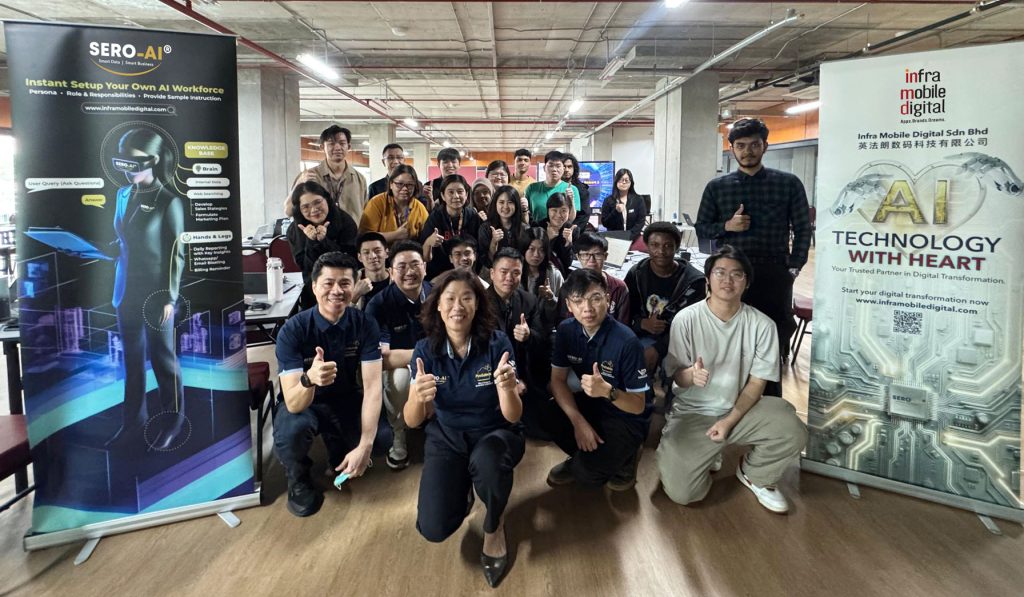
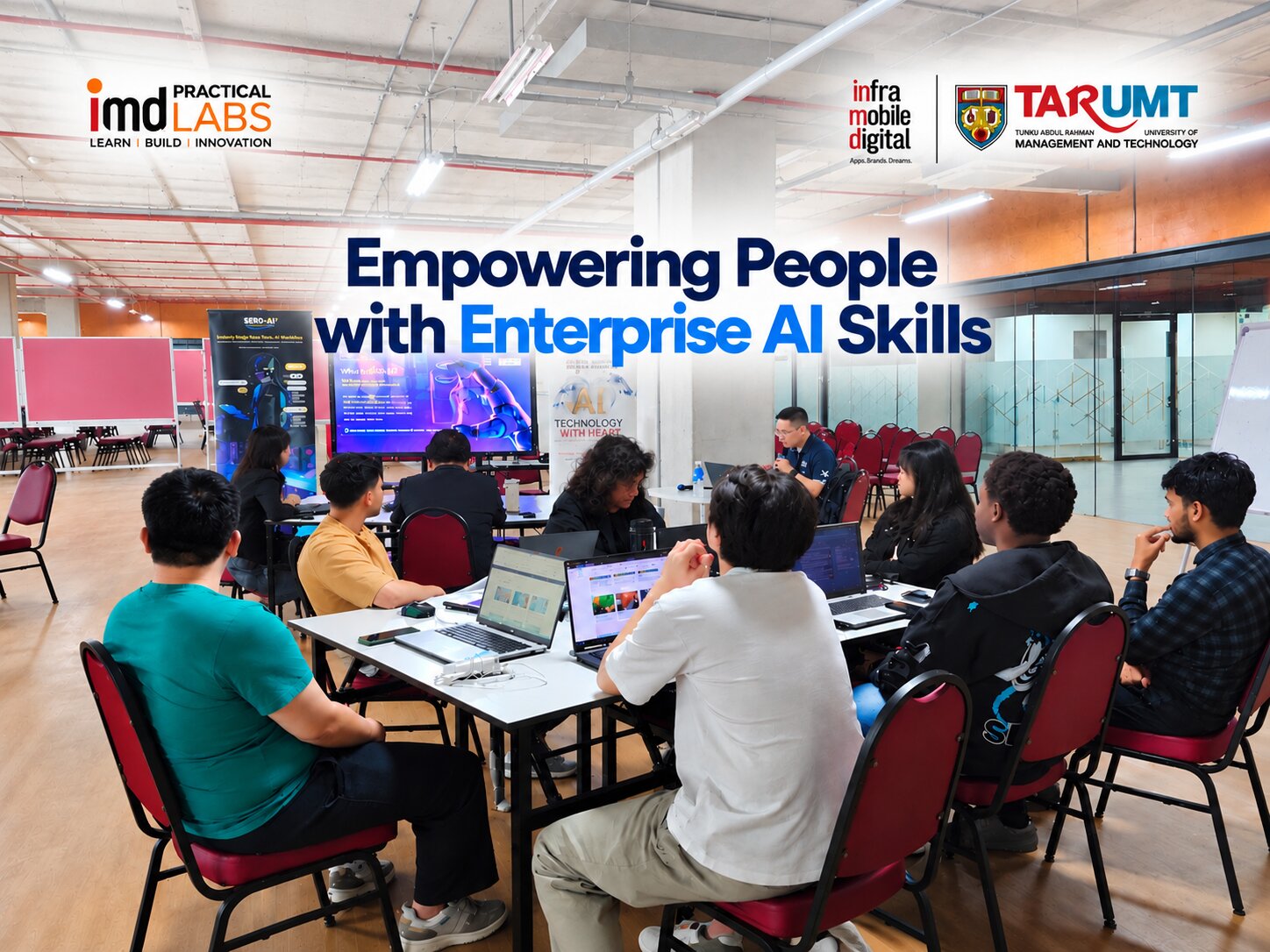
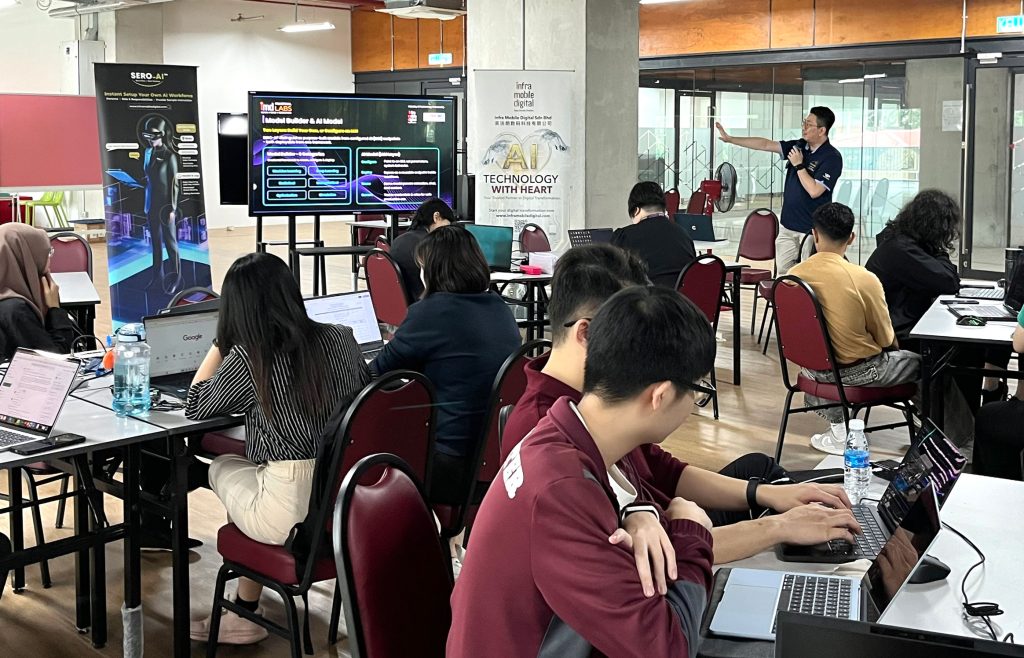
It also captures the learning direction of SERO-AI® Workshop Cohort 3 at Tunku Abdul Rahman University of Management and Technology (TAR UMT). Through IMD Practical Labs, Infra Mobile Digital Sdn Bhd (IMD) and TAR UMT continue their collaboration to help students and lecturers connect AI knowledge with practical problem-solving.
Following the first SERO-AI® workshop at TAR UMT and SERO-AI® Workshop Cohort 2, the initiative forms part of a planned 12-cohort programme. Its purpose is to help participants understand how to organise information, use it with AI, check the results and apply the same knowledge to different tasks.
Is Your Information Ready for SERO-AI®?
Imagine you are preparing for a product launch. You have a product brochure, delivery terms and an FAQ file ready to use. Before bringing that information into SERO-AI®, ask yourself four simple questions:
- “Am I using the latest information?”
Identify the current, approved version of each document. Record when it was updated so you can recognise outdated information later.
- “Do these documents tell the same story?”
Compare the brochure, delivery terms and FAQs. Remove duplicates and resolve conflicting details, such as different delivery arrangements or product descriptions.
- “Can I find what I need easily?”
Give documents clear names and group related information under topics such as product features, delivery and customer support.
- “Who can help when something is missing?”
Identify the person responsible for confirming unclear details. If the documents leave a question unanswered, get clarification before using that information in a customer response.
These small steps give you a clearer foundation for working with AI. You know where the information comes from, which version to trust and what still needs checking.

This is where SERO-AI® has a clear role. As IMD’s data hub, it is designed to bring information from different sources into a connected environment that supports analytics and business applications. For learning purposes, that provides a way to explore how organised knowledge can support multiple AI tasks.
Using SERO-AI® and Checking the Results
With the source material prepared, the learner can ask a focused question: “Using the approved product information and delivery policy, draft a brief response explaining what the customer should expect when placing an order.” The request identifies the task, the audience and the information the answer should draw upon.
A useful next instruction is to flag anything the documents do not explain. This helps the learner look for gaps and decide what needs clarification. The first response becomes something to examine, refine and test before it is used.
Suppose the draft says installation is included, but the policy only mentions delivery. The sentence sounds helpful. It also promises something the source material has not confirmed. Checking the answer against the original document reveals the problem.
The learner can remove that statement, ask the business owner to clarify the policy and update the approved information once an answer is available. Repeating the question then helps check whether the revised source supports a more accurate response.
This is a valuable learning moment. Reviewing an AI answer can reveal weaknesses in the information behind it. A missing condition, an unclear description or an outdated instruction becomes visible because somebody has tried to use that knowledge for a real task.
Reusing Information for Different Tasks with SERO-AI®
Then the exercise takes a different turn. The learner returns to the same information and asks for a briefing for a new salesperson. The purpose has changed. A customer needs a direct answer; a new colleague needs context, key product details and guidance on questions that require further checking.
Next, the learner could request a short practice quiz with answers checked against the approved material. The documents now support staff learning. Another request could turn them into a concise FAQ for review. Each output needs its own checks, but the underlying information can be reused.
The learner should return to the approved source for each new task. Copying an unchecked AI answer into the next prompt can carry its mistakes forward. Keeping source information separate from generated drafts makes it easier to trace a claim, correct an error and understand why two outputs differ. A short record of the source version and review date also helps when the material is revisited later by colleagues.
The discovery is that one organised source can serve several audiences. The learner begins to see connections between tasks that initially appeared separate. Answering an enquiry, preparing a briefing and supporting a colleague’s learning all draw on shared knowledge.
IMD Practical Labs: Building Enterprise AI Skills
For IMD Practical Labs, this gives practical AI learning a meaningful focus: recognising what information is available, deciding how it could help and adapting its use thoughtfully. Students can practise explaining their choices, while lecturers can explore how similar exercises might support discussion, assessment and applied learning.
The same thinking leads naturally into Enterprise AI: applying AI within an organisation’s work, systems and decisions. A useful business application brings together relevant information, a defined task and people who can judge whether the result is suitable.
As more people use shared knowledge, keeping it current becomes part of the work. Someone needs to own updates, decide which documents are approved and check important outputs. Access should reflect each person’s role. Reusable information earns its value through continued care.
Enterprise AI for Property Sales and Staff Learning
For a property developer, the scenario is easy to recognise. Replace the sample product documents with approved project information, unit specifications and buyer FAQs. A sales team could use that knowledge to prepare enquiry responses, briefing notes and learning materials for new colleagues.
A buyer may ask which fixtures are included in a particular unit type. The response should draw on the relevant approved specification. A new salesperson may need a broader briefing covering unit differences and common questions. Both tasks use related information, presented for different needs.
The connection becomes especially clear when project details change. An updated specification should be reflected in the source used for future drafts. Existing responses and training materials may also need review. Reusing information works best when teams understand its version, scope and limitations.
With suitable setup, SERO-AI® can provide a foundation for exploring these connected uses of business information. The practical opportunity is to help people find relevant knowledge and apply it consistently across sales support and staff learning.
Explore Enterprise AI with IMD Practical Labs
The IMD and TAR UMT collaboration gives students and lecturers a setting in which to explore these habits. Through IMD Practical Labs, the ambition is to develop people who can identify a useful task, prepare the information it needs and evaluate the outcome.
For readers considering Enterprise AI, a practical first step is to choose one recurring question and gather the approved information needed to answer it. Test a response, check every important detail, then try using that same source for a second task.
That second task may be where a new possibility becomes clear. Explore SERO-AI® and IMD Practical Labs with IMD to discover how your information could support more useful ways of working.
