

AI Digital Transformation Partner: 8 Powerful Benefits For Malaysian Businesses
By Ms. Tina Leon, Managing Director of Infra Mobile Digital Sdn Bhd 04/08/2026
Table of Contents
Why does a business need an AI digital transformation partner?
A business needs an AI digital transformation partner to connect AI investment with strategy, people, data, systems, workflows and governance. The partner helps leadership select valuable use cases, redesign processes, integrate technology, manage change and measure results. This reduces fragmented experiments and builds a practical roadmap for sustainable transformation.
The underlying problem is rarely a lack of tools. It is a lack of alignment. Leadership may have a broad ambition but no shared priorities. Employees may be uncertain about how AI affects their roles. Data may be scattered across several systems. Processes may depend on spreadsheets and individual knowledge. Governance may arrive only after a risk appears.
An AI digital transformation partner helps the organisation address these connected issues. The partner’s role is wider than software supply. It combines business analysis, data and technology capability, implementation experience, change management and continuous improvement.

1. Aligning AI with leadership priorities
A transformation partner works with leadership to translate strategic goals into a prioritised portfolio of use cases. Each use case can be evaluated by expected value, feasibility, data readiness, risk and implementation effort. This prevents the roadmap from being driven only by whichever tool is currently attracting attention.
Leadership alignment also clarifies ownership. A senior sponsor can remove barriers, approve resources and keep departments focused on the shared outcome. Without this support, AI may remain an IT experiment even when the process being changed belongs to sales, operations, finance or customer service.
2. Creating one roadmap across people, data and systems
Transformation is a connected journey. A new AI assistant may require access to several data sources. The data may contain inconsistent fields. Employees may need a revised workflow. Managers may require a new approval policy. The customer communication process may also change.
A partner maps these dependencies and creates a phased roadmap. This makes sequencing visible: what must be cleaned, connected, decided or learned before the next capability can be introduced. It also helps the organisation balance quick wins with foundational work.
3. Turning fragmented data into usable intelligence
An AI digital transformation partner helps identify the data needed for priority decisions and workflows. The work may include integration, data quality rules, master definitions, access controls and ownership. Not every data source needs to be connected at once. The aim is to establish a trusted foundation for the selected use case.
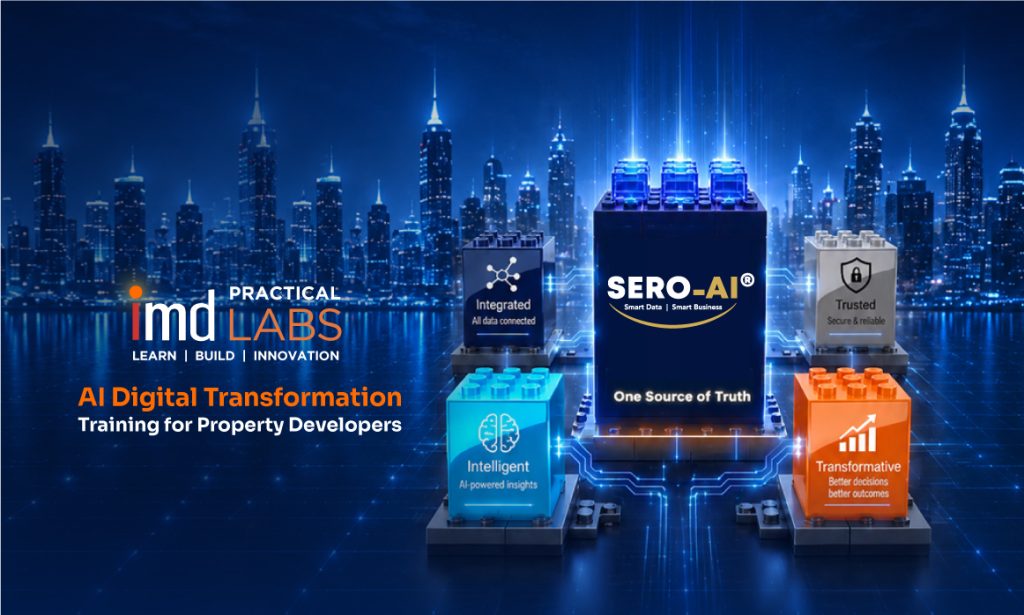
Platforms such as SERO-AI® can support this approach by consolidating operational data and presenting it through business intelligence, AI assistance and automated workflows. Technology becomes useful when the information is relevant, governed and connected to action.
4. Redesigning workflows before automating them
Automating a poorly designed process can make inefficiency move faster. Before implementation, a partner examines the current workflow: where work starts, who handles it, what information is required, where delays occur and which exceptions need judgement.
The future workflow can then remove unnecessary steps, clarify roles and define when automation should act. For example, an AI-enabled process may classify an enquiry, retrieve approved information, prepare a response and route a complex case to an employee. Each stage needs clear boundaries.
5. Managing employee adoption and mindset AI Digital Transformation
People determine whether transformation becomes part of daily work. Employees may resist AI because they fear job loss, distrust the output or do not understand why the process is changing. Others may adopt tools too quickly without recognising privacy or accuracy risks.
A transformation partner supports structured adoption through communication, practical training, user involvement and feedback. Employees should understand the business goal, their role in the new workflow, the limits of the system and the method for reporting problems.
6. Building governance and security into implementation
A partner can help establish governance from the beginning. This may include an approved-use policy, data classification, role-based access, human review requirements, vendor assessment, incident reporting, audit logs and a register of AI use cases. Higher-risk applications should receive stronger controls.
Governance must be practical. If rules are too vague, employees will interpret them differently. If they are too restrictive, teams may use unapproved tools outside the organisation’s visibility. Clear guidance, suitable approved solutions and ongoing education create a safer balance.
7. Measuring business value and learning from evidence
An AI project should have a defined success measure before it begins. Depending on the workflow, useful metrics may include processing time, response time, manual hours, error rate, conversion, cost per transaction, customer satisfaction or reporting speed.
A transformation partner helps establish the baseline, measurement method and review period. This enables management to distinguish a promising demonstration from a solution that creates operational value.
8. Scaling successful use cases without losing control
An experienced partner helps standardise the core solution while allowing controlled configuration. It can document the workflow, prepare training, strengthen monitoring and confirm that governance remains appropriate. This reduces the risk of every department creating its own version.
Scaling should occur in stages. The organisation can expand to a comparable team, observe performance and resolve issues before moving further. This protects implementation quality and creates a repeatable transformation capability.

How do you choose the right AI digital transformation partner?
Look for a partner that begins with business questions rather than a product demonstration. It should be able to discuss data, integration, process design, user adoption, governance and measurement in practical terms. Relevant industry experience is valuable because it reduces the time needed to understand the workflow.
Ask how the partner handles data security, human review, system integration, change requests, support and long-term product development. Request examples of how success is measured. Also confirm which responsibilities remain with your organisation, because transformation cannot be fully outsourced.
What can the first 90 days look like?
During the first 30 days, the organisation can align leadership, identify pain points, map key systems and assess a shortlist of use cases. During days 31 to 60, it can select one pilot, prepare the data, redesign the workflow and establish controls. During days 61 to 90, it can implement the pilot, train users, monitor results and conduct a structured review.
The Right Partner Turns AI Activity into Business Progress
The right partner brings people, data, systems and strategy together. IMD strengthens this journey through IMD Practical Labs —hands-on AI Digital Transformation training that helps leaders and teams build the right AI mindset, understand practical use cases and turn new knowledge into workplace action.
For Malaysian businesses preparing for AI Nation 2030, this coordinated approach can make the difference between isolated experimentation and sustainable operational progress.
Ready to build a practical AI roadmap? Partner with IMD to align your people, data, systems and strategy through SERO-AI®, IMD Practical Labs and an outcome-focused AI Digital Transformation approach.